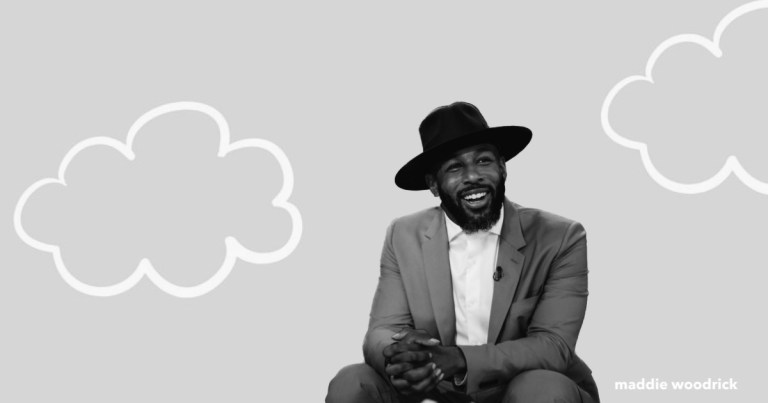
I am feeling fortunate to live in a time where someone who dies by suicide can make national news and bring attention to one of the most silent and deadliest killers. I am also feeling deeply saddened by another incredibly bright light that was taken from his family, friends, and community, way too soon. I heard about Stephen “tWitch” Boss’s passing through a group chat between my sister and my mom. As soon as they started bringing up suicide, I choose to avoid any and all content that had to do with his passing. I grew up watching The Ellen Show every day after school and once my mom founded her nonprofit, i understand, attending The Ellen Show as a guest became a goal we all began to manifest. I wasn’t too familiar with who Stephen was, but I knew his passing felt different to me. All of the articles and social media posts people were sharing, they felt different to me.
I’m not sure if avoidance or desensitization is the right word to use, but when I hear about someone who dies by suicide, I don’t typically get too emotional. I was able to write a reflection on when the founder of Kate Spade died by suicide, I was emotional, but sad wasn’t the right word. I was angry because many news articles focused on the “how” she did it, not the “why.” I am seeing and experiencing the same trend with Stephen’s death. As much as I’ve tried to avoid thinking about or seeing news articles about his passing, I inevitably had to face it head-on.
It was the end of the work day and my coworker was casually scrolling through her phone when she looked up at me and asked, “Do you follow The Ellen Show or So You Think You Can Dance?”
I knew exactly where this was going. I braced myself and replied, “Yeah, it’s so sad about what happened with tWitch.”
She looked up at me and asked, “Do you know how he did it?”
I froze like a deer in headlights. I felt like all my confidence in being someone who prided myself as a “mental health advocate” went right out the door. I had recently made a career shift from working in direct care roles at different mental health treatment centers, to more of an office job at a nonprofit. I seriously valued my experience working in treatment centers; although some days were really hard, I loved working directly with the clients. One of my biggest takeaways from working with them was how important it is to be mindful of what you say and how you say it.
What triggers me, or you are vastly different than what could trigger the stranger standing next to you. Something that you and I laugh about, could be the reason why another person can’t sleep at night. I gradually began speaking with much more intention around eating, working out, relationships, gender identity, self-harm, suicide, anxiety, school, suicide ideation, depression, and the list just goes on and on. I thought I was doing this for the clients, but I realized I was also doing it for myself and my own emotional safety. The sort of interaction that occurred between me and this coworker felt like foreign territory, so I quietly said, “I don’t know..” and proceeded to pack up my things so I could release my emotions in the safety of my car.
I didn’t realize until that interaction that Stephen’s death and all of the news surrounding his death, were very triggering for me. I wasn’t able to identify this as a trigger because I thought as long as I avoid it, I won’t feel it. Except, I was feeling everything. Instead of releasing it in a way that was healthy and constructive, I let it get to a point where I imploded. I didn’t know much about Stephen, but I knew he was a husband and a dad to three young kids. I thought of myself, who was five, and my two older siblings who were twelve and fifteen when my dad died by suicide.
How Stephen died didn’t cross my mind once, what crossed my mind was the fact that his kids are going to grow up asking the same questions my siblings and I asked: if he loved us, why did he choose to die? I want his family and quite frankly, everyone, to know that suicide is not a choice. Suicide is a side effect of a mental or brain illness, or the result of someone whose emotional or physical pain became too unbearable to live with. Similar to cancer, my dad was sick. If cancer goes untreated, it may become terminal and the same goes for anyone living with mental health issues.
Although I believe this, what really matters is how we put these beliefs into action. Instead of sharing an article detailing how Stephen “tWitch” Boss died, I challenge you to share a resource that may be beneficial to yourself or someone you may know. I challenge you to donate to a nonprofit that supports mental health causes. I challenge you to check up on a friend or family member who has lost a loved one to suicide, who is a survivor, or someone you may know who is struggling. When we become more mindful of what we say and how those words may affect others, we are taking the first step in erasing the stigma around suicide and mental health. That is what may save a life.

 Woodrick Writes